Parasites and Cancer - Is there a Connection?
Disclaimer: This article is for educational and scientific discussion only. It does not provide medical advice or recommend any treatment for cancer. None of the drugs discussed are approved cancer therapies, and evidence referenced includes laboratory and preclinical research unless explicitly stated otherwise. Individuals should only consult qualified medical professionals regarding diagnosis and treatment decisions.
Parasites and cancer: what is established?
At first glance, a connection between parasitic infections and cancer may seem unlikely. However, there is a well-established scientific association between certain parasitic worms and specific cancers.
Since 2012, the International Agency for Research on Cancer (IARC) has classified several helminths as Group 1 carcinogens, meaning there is sufficient evidence that they can cause cancer in humans. These associations are specific, and include:
bladder cancer
bile duct cancer
This classification applies to chronic infection with particular species, not to parasites in general.
Historical observation: Schistosoma haematobium
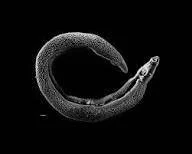
One of the earliest documented links comes from Egypt in the early 20th century, where researchers observed that individuals with chronic infection by Schistosoma haematobium (the urinary blood fluke) had higher rates of bladder cancer
This parasite, which causes urinary schistosomiasis (bilharzia), is acquired through exposure to contaminated freshwater.
How parasites may contribute to cancer (mechanisms)
Research into parasite-associated cancers suggests several possible mechanisms:
chronic inflammation in affected tissues
immune system modulation
disruption of normal cellular repair
increased cell turnover and mutation risk
These are general biological processes also seen in other chronic inflammatory conditions.
Antiparasitic drugs and cancer research (experimental context)
Separate from the infection–cancer link, there has been scientific interest in whether some antiparasitic drugs have biological effects in cancer-related experimental systems.
This falls under the broader field of drug repurposing, where existing medications are studied for new applications.
It is important to emphasise:Most of this work is based on laboratory (cell culture) and animal studies. It does not establish clinical effectiveness in humans.
Levamisole: from dewormer to chemotherapy adjunct
One historically documented example is levamisole, originally developed as a veterinary anti-parasitic drug.
In the 1990s, levamisole was used in combination with 5-fluorouracil (5-FU) as an adjuvant treatment for stage 3 colon cancer, following clinical studies showing improved outcomes compared with 5-FU alone in certain patients.
Levamisole was later phased out in favour of newer treatment regimens.
This example is sometimes cited in discussions of drug repurposing, although its role was as an adjunct within established chemotherapy protocols.
Earlier research and historical hypotheses
Interest in links between parasites, metabolism, and tumour biology predates modern oncology.
A declassified 1950 CIA document titled “Biochemical Resemblance Between Endoparasites & Malignant Tumors” summarised earlier Russian research exploring whether tumours and parasites might share certain metabolic characteristics.
The report also referenced early experimental work with antiparasitic compounds such as “Myracyl D”.
Note: These materials are best understood as historical scientific hypotheses, rather than validated clinical findings.
Laboratory research on antiparasitic compounds
From the late 20th century onward, a number of antiparasitic drugs have been studied in preclinical cancer research, including:
Mebendazole – shown in laboratory models to interfere with microtubule formation and cell division
Benzimidazole compounds – investigated in vitro and in animal studies for tumour-related effects
Ivermectin – studied in experimental systems for effects on signalling pathways associated with cell growth
Across multiple studies, researchers have observed:
effects on cell division in cultured cancer cells
influence on tumour growth in animal models
interaction with various cellular pathways
However: These findings are preclinical and do not demonstrate that these drugs are effective cancer treatments in humans.
Public discussion and anecdotal reports
In recent years, there has been increased public interest in this topic, particularly online.
One widely circulated anecdotal account is that of Joe Tippins, an American who described his personal experience using fenbendazole alongside other approaches following a diagnosis of advanced lung cancer. His story, shared online in 2018, significantly increased public awareness of this subject.
Similarly, Mel Gibson discussed anecdotal reports involving antiparasitic drugs during a 2025 appearance on the The Joe Rogan Experience.
Another figure associated with documenting such cases is William Makis, a former Canadian physician who has published case reports and commentary on this topic. A 2025 case series he authored describing individuals using fenbendazole was later retracted in 2026.
It is important to emphasize: These accounts are anecdotal and not equivalent to clinical evidence. They have not been validated in controlled trials.
Earlier alternative hypotheses: Hulda Clark
In the 1990s, Hulda Clark proposed that parasites were a primary cause of cancer.
While modern research does support links between certain parasites and specific cancers, the broader claim that parasites are the primary cause of all cancers is not supported by scientific consensus.
Research developments after 2017
Following increased public attention, research interest in antiparasitic compounds has continued within academic settings.
Published reviews and studies between 2017 and 2026 have explored:
microtubule disruption by benzimidazole compounds [1][2]
effects on angiogenesis and tumour growth in experimental models [1][4]
interactions with signalling pathways involved in cancer biology [3]
Systematic reviews generally conclude:
preclinical anti-tumour activity has been observed [1][4]
mechanisms are biologically plausible in experimental systems [3][4]
clinical efficacy in humans has not been established [4]
As of 2026:
There are no large-scale, controlled clinical trials demonstrating that these drugs are effective cancer treatments [4].
At present:
antiparasitic drugs such as ivermectin or fenbendazole are not approved for the treatment of cancer
they are not part of standard oncology care
their use in cancer outside of clinical trials is not supported by established medical evidence
Summary
Certain parasitic infections are recognised risk factors for specific cancers.
Chronic inflammation is a key mechanism linking infection and cancer risk.
Some antiparasitic drugs have shown biological activity in laboratory and animal models.
Historical and modern research has explored possible overlaps between parasite biology and tumour biology.
Named anecdotal reports (e.g. Joe Tippins) have contributed to public interest but do not constitute clinical evidence.
No antiparasitic drug is currently an approved or validated cancer treatment.
References
References
[1] Dogra N, Kumar A, Mukhopadhyay T.
Fenbendazole acts as a microtubule destabilizing agent and causes cancer cell death.
Scientific Reports. 2018.
[2] Mukhopadhyay T, Sasaki J, Ramesh R, Roth JA.
Mebendazole elicits a potent antitumor effect on human cancer cell lines both in vitro and in vivo.
Clinical Cancer Research. 2002.
[3] Tang, et al.
Ivermectin, a potential anticancer drug derived from an antiparasitic drug
Pharmacol Res 2020.
[4] Golla, et al.
From Deworming to Cancer Therapy: Benzimidazoles in Hematological Malignancies
Cancers (Basel) 2024