Exercises For A Stiff Upper Back
I often treat patients who have very stiff upper backs, particularly the top 3 vertebrae of the thoracic spine. More often than not, they come to me complaining of neck pain, but the real problem area is actually the upper back. I find that treating the upper back helps greatly with neck symptoms, and this has also been demonstrated in a number of scientific studies.
When really bad, these joints barely move at all and sometimes the tissue over them becomes tender and swollen. I believe this problem is almost certainly caused by extended computer & phone use. This has been shown to stress multiple structures in the neck and upper back due to the head being held forward from its natural centre of gravity position. This is now a well studied phenomenon, which I’ve written about before here.
Because of the demands of modern life, I believe unless you specifically go out of your way to get this bit of your back moving again, then the stiffness is unlikely to improve. Like a lot of musculoskeletal problems, there’s no agreement on the best exercises to combat a stiff upper back, particularly the upper 3 vertebrae (T1-3) of the thoracic spine, where there’s hardly any research at all.
Having said that, what follows are 3 exercises with some scientific evidence supporting their use in helping to improve movement in the thoracic spine. The first ‘peanut’ exercise in particular can be used to target the upper back joints more precisely, whilst the others will certainly help, but target the thoracic spine more generally.
Exercise 1 - Tennis Ball Peanut
To do this exercise you first need to create what is known as a ‘tennis ball peanut’, which just consists of taping two old tennis balls together. I did this using standard gaffer tape, which you can see in photos 1 and 2 below.
There have actually been a few studies looking at the beneficial effects of using tennis balls this way e.g. Johnson et al., 2012 , Yasuda et al., 2023 , Nakamaru et al., 2019, Kim et al., 2020 .
You’re then going be placing these balls under the top bit of your back. Photos 3 and 4 below are from a research paper and give you a general idea of how the peanut is positioned under the back.
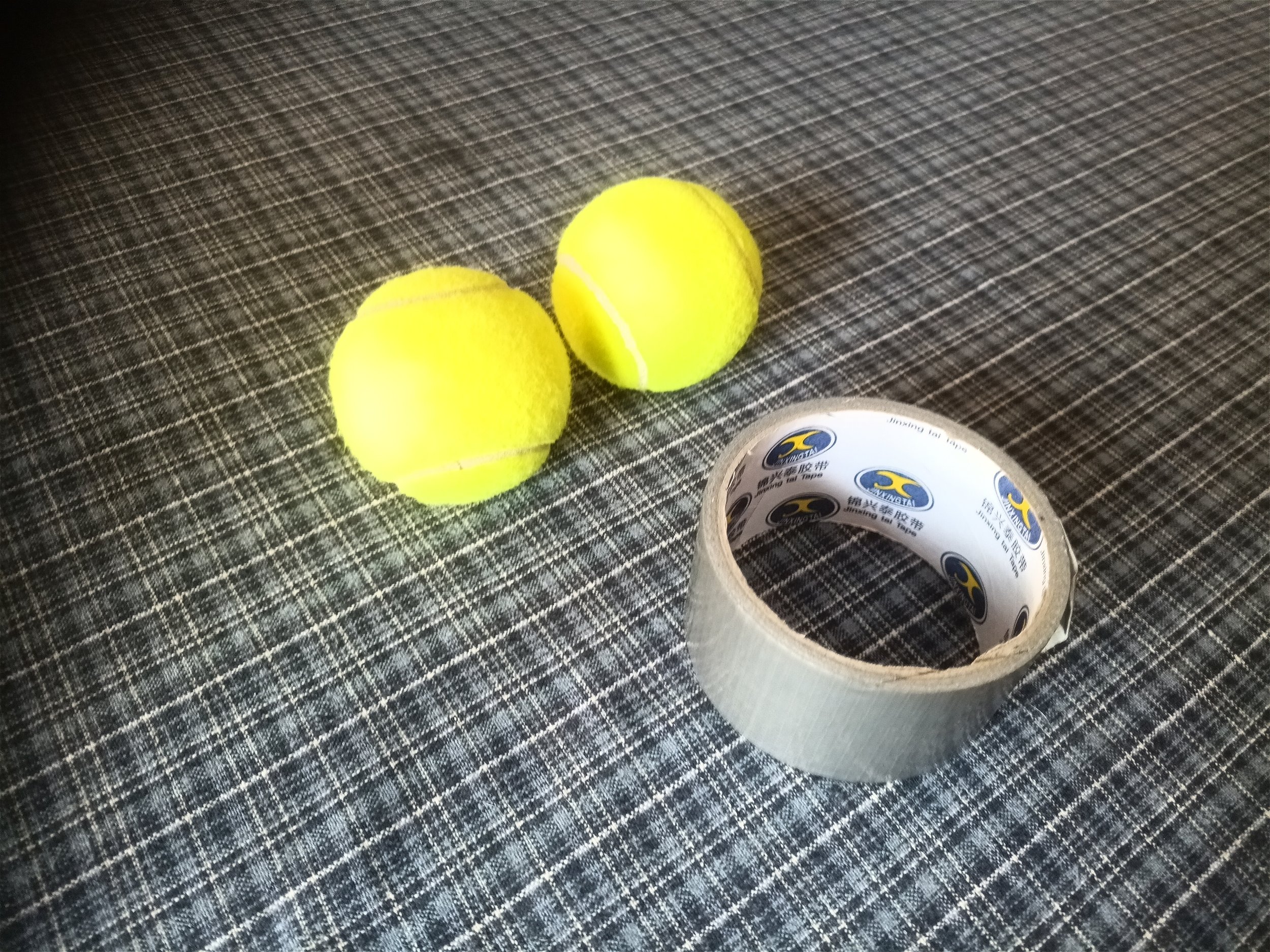
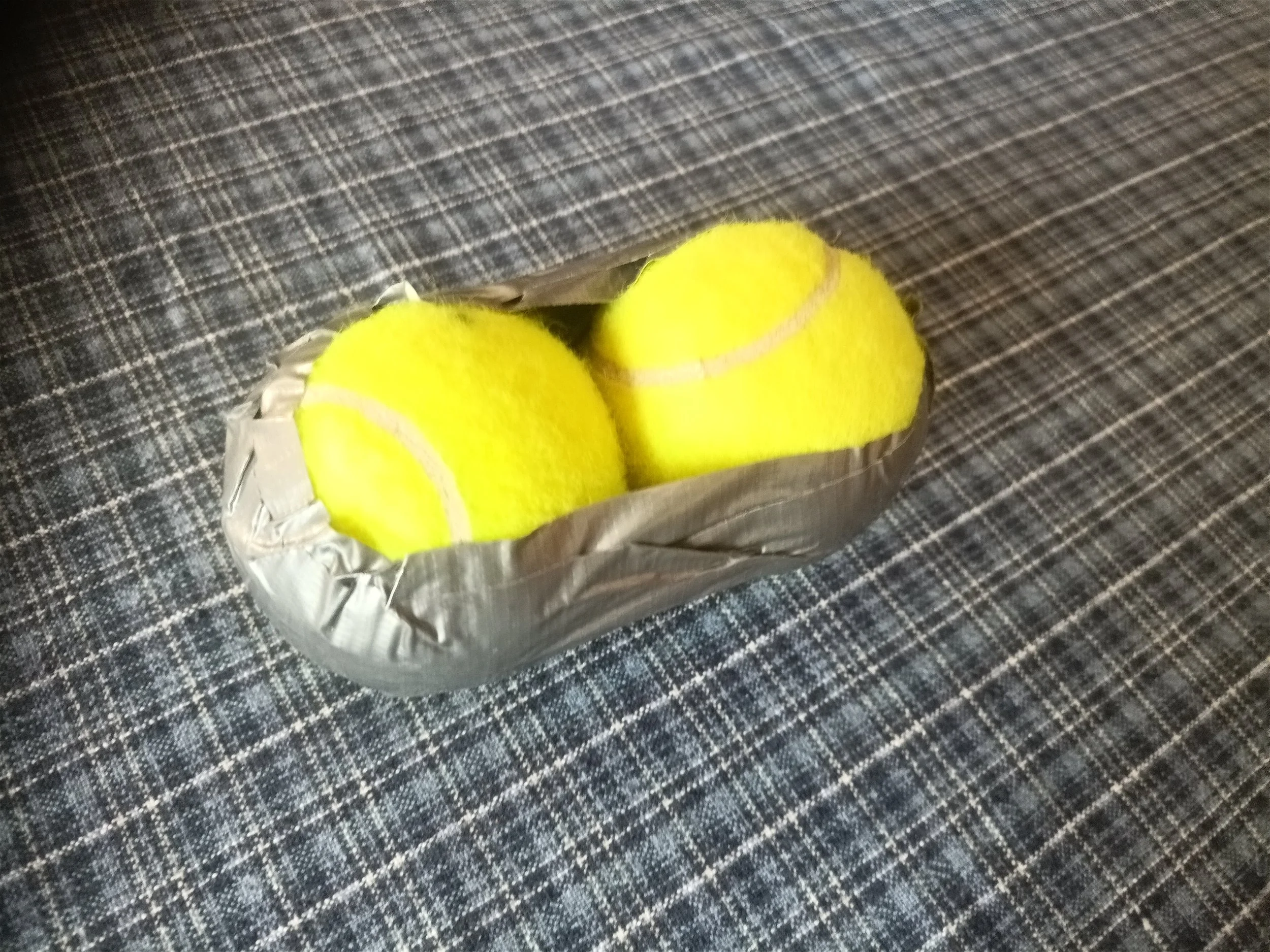
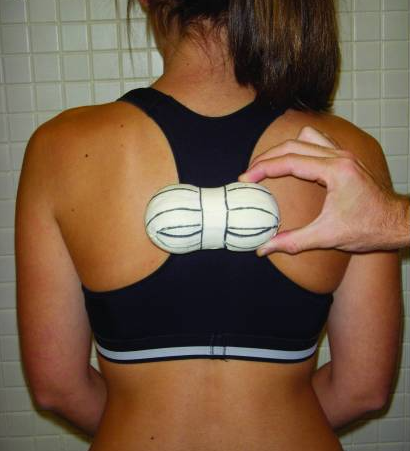

Please note, we will actually be using the peanut higher up the back than the photographs above show.
The video below shows the adjusted higher positioning of the peanut. After working with the peanut at one position, move it down slightly by about 2 inches so you work on the next joint below. You can keep moving the peanut down like this until you are in your mid back.
Because you are likely to be working on chronically stiff joints when you perform this exercise, it may be quite uncomfortable. It’s important that you are sensible about the degree of discomfort, and discontinue the exercise if it becomes too painful. It’s also worth waiting for a day or so after you first perform it to see if there is any lingering excessive soreness.
If the exercise does prove to be too painful to perform, then get some advice from a qualified physical therapist before continuing.
Exercise 1 - Tennis Ball Peanut
There are a number of different ways of using the peanut tennis balls on the upper back, and none have been proven to be superior to any other, so for people who want to look at some slightly different movements, this is another good short video here.
For the mid and lower thoracic spine, particularly if you have a rounded upper back shape, then using a foam roller can be another way of improving movement in this part of the back. You can see how to use a foam roller here.
Exercise 2 - Quadruped Thoracic Rotation
The following exercise has been shown in studies to help increase the range of rotation in the thoracic spine
Exercise 2 - Quadruped Thoracic Rotation
If sitting back on your heels is uncomfortable, you can also do the exercise on your knees instead.
Exercise 3 - Flamenco Thoracic Spine Rotation
For people who cannot easily do exercise 2, either because they can’t get up and down off the floor, or maybe because they have knee or hip issues, there is another standing thoracic spine rotation exercise that Japanese researchers found worked as well as the floor-based ones.
This is called the Flamenco Thoracic Spine Rotation, deriving its name from its similarity to the Spanish Flamenco dancing posture. Rather than describing the exercise, it’s best to watch how it’s performed in the video below. The video has been produced by the Japanese university that did the original research. Don’t be put off by the Japanese script at the start, just follow the positions shown at the end of the video.
Exercise 3 - Flamenco Thoracic Spine Rotation
As I mentioned earlier, people’s thoracic spines can be very stiff, so listen to your body when doing these exercises. It’s better to approach these exercises gradually and gently. A little bit of temporary discomfort is probably ok, but don’t do the the exercises if they become too painful. It’s also worth waiting for a day or so after you first perform them to see if there is any lingering excessive soreness.
Finally, it’s worth mentioning that loosening up the thoracic spine is something that osteopaths are very good at, so if you have a stiff upper back that isn’t responding well to exercises, then consider a couple of osteopathic treatments.
Cliff Russell,
Registered Osteopath @ Osteo Studio